Website creation
Landing page or multi-page website: what does your business need?
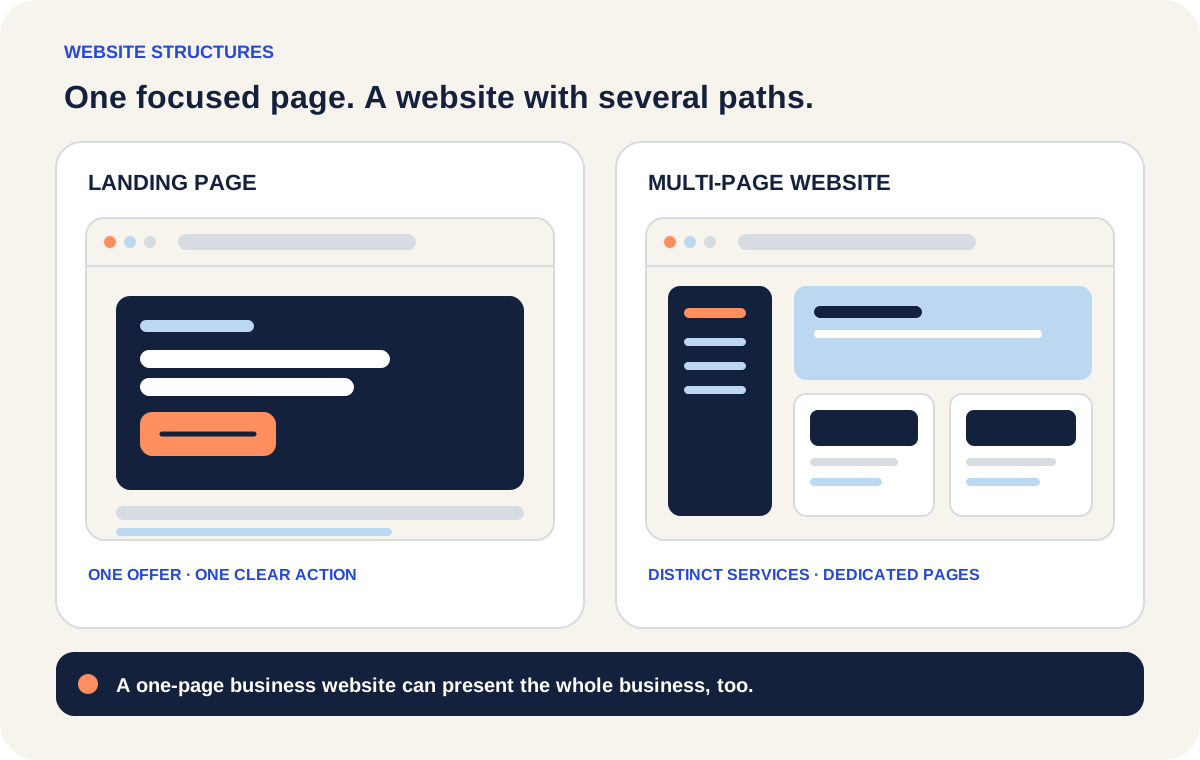
If your business has one main offer and one clear action for visitors, a landing page may be enough. If people have different questions about several services, separate pages may help. Choose the structure based on what someone needs to know before contacting you, not on the assumption that more pages look more professional.
A landing page is usually built around one offer, audience, campaign or conversion goal. A one-page business website can have a broader purpose: presenting the whole business, its services, reviews and contact details in one place. Both can use a single page, but they do not necessarily serve the same goal.
Start with the visitor’s task, not the page count
A landing page usually guides visitors toward one action: sending an enquiry, booking an appointment, buying a service or requesting an estimate. The page explains the offer, shows why it may help, answers key questions and makes the next step clear.
A multi-page website can suit a business with distinct services or visitors who need more detailed information. Its structure might include a home page, services, about, examples of work and contact details. Each page should answer a different question or help someone take a specific step.
Page count by itself says little about quality. Five pages are not more useful than one if they repeat the same general claims.
The hard part is often the content, not the page count
Adding pages is not always the hardest part of a project. The challenge is deciding what information deserves its own page, how to organize it and how to bring it together in a consistent design.
Every page needs a purpose. If the About page contains only broad claims about quality and professionalism, while the Services page repeats the home page, the extra pages may not help a customer decide.
A good landing page is not simply a short website, either. One page has to explain the offer, show its benefits, answer the main questions and guide someone toward an action. The copy still needs to be clear, and the design should help people read it rather than distract them from the meaning.
A headline can be memorable, but clarity comes first: it should explain what the business offers. Short copy is not a reason to leave out important information. Long copy is not automatically persuasive just because it takes up more space.
| Content available | Possible structure |
|---|---|
| Three similar treatments, short descriptions, prices, photos and reviews | One-page business website |
| Five distinct services, each with detailed information and FAQs | Multi-page website |
| One promotional service with a single booking goal | Focused landing page |
| Several services but little written content prepared yet | Plan the missing content before deciding |
Having little content ready does not automatically mean a business needs only one page. Sometimes the right next step is to prepare the missing information before choosing the structure.
When one landing page is enough
One page can work when you promote one service, launch a new offer or collect enquiries for a specific campaign. For example, someone considering one type of treatment may need a description, price or conditions, answers to common questions, the location and a booking button.
A landing page is useful when the path to action is short and there are no unrelated services to explain. But if visitors need to compare treatments, understand restrictions or prepare in advance, do not omit that information just to keep the design minimal.
When separate pages help
Separate pages help when services differ meaningfully and visitors need distinct explanations, preparation details or answers to specific questions.
That does not mean every item in a list needs its own page. If there is little to say and the services are nearly identical, you can explain them together. Separate pages when the information is meaningfully different and helps people choose.
What if you do not have much content yet?
Do not invent copy just to fill a predetermined number of pages. Start with one page if it honestly explains the offer and helps visitors contact you. Expand the website later when you have new services, customer questions, photographs or other useful material.
Before adding a page, ask: what new information will it provide? Which visitor question will it answer? If the answer repeats an existing page, a separate section may not be useful yet.
What the Studio Anna Belle example shows
We created the original website for Studio Anna Belle, a beauty salon in Switzerland. The version shown in our portfolio is a demonstrative redesign made later.
For a business like this, visitors may need to find the available services and prices, photos of the salon’s work, reviews and a way to book.
If each treatment can be explained clearly in a few lines, with its price and examples, it does not necessarily need a separate page. A one-page business website with well-organized sections may be enough. Services that require detailed explanations, preparation instructions or answers to specific questions may justify dedicated pages.
The structure should reflect the information customers need, not just the number of services. A clinic offering complex procedures may need separate pages when each procedure requires its own preparation guidance, contraindications, recovery information and FAQs.
Five questions to help you choose
- What do you want to present? One offer or the whole business?
- How different are your services? Can you explain them together, or do they need separate information?
- What should customers know before contacting you? Prices, examples, conditions or detailed explanations?
- What should visitors do next? Book, request a quote or compare several services?
- Would separate pages make information easier to find? Or would one well-organized page be enough?
Your answers can help you choose a starting structure and adapt it as the business changes.
More pages do not automatically make a better website
You do not need extra pages just to make a website look bigger. But important information should not be squeezed onto one page simply to keep the site small.
A good website has as many pages as people need to understand the offer, find useful information and know how to get in touch.
Already have an idea of your website structure? Use our website cost calculator for an initial estimate.
Prepared with AI assistance by Lucidity Soft.
← All articles